Introduction
Biocompatibility testing plays a crucial role in ensuring the safety and efficacy of medical devices. Governed by a complex regulatory framework, including standards set by entities like the FDA and ISO, these tests evaluate how devices interact with the human body and identify any potential adverse effects. Adhering to these standards is not only about compliance but also about fostering innovation and ensuring the availability of safe and effective medical technologies.
This article explores the regulatory landscape, FDA guidance, ISO standards, material selection, key concepts in biocompatibility testing, the role of accreditation, best practices, and common challenges in conducting these tests. By understanding and navigating this complex environment, medical device manufacturers can protect patient health and bring forward innovative technologies.
Regulatory Framework and Standards
Evaluating the compatibility of is a vital part of guaranteeing the well-being of the patient and the effectiveness of the product. It is governed by a complex framework of standards and regulations, notably by entities such as the U.S. Food and Drug Administration (FDA) and the International Organization for Standardization (ISO). These instructions are crucial in preserving the authenticity of healthcare equipment throughout their lifespan.
In the realm of healthcare instrument control, access to the mechanism’s is compulsory. With regulations evolving and varying across different markets, must maintain a comprehensive understanding of their product’s reach. Some regulations are specific to particular countries or regions, and manufacturers with a global market presence often follow the highest level of requirement to ensure compliance across all markets.
The significance of following is emphasized by organizations like the Standards Development Organizations (SDOs). These criteria are established on principles of transparency, openness, balance, and due process, ensuring that a wide range of stakeholders can contribute to the creation of these guidelines. These standards are not only about compliance but also about fostering innovation and ensuring the availability of safe and effective technologies.
The ever-changing nature of regulation in the field of healthcare is demonstrated by recent policy intent statements made by regulatory bodies such as the Medicines and Healthcare products Regulatory Agency (MHRA). Such statements outline the intention to acknowledge approvals of from other regulatory regions, thereby simplifying the market access for manufacturers and ensuring that patients have access to innovative and safe health technologies.
For manufacturers of healthcare equipment, it is crucial to not only comprehend the current but to be ready for future changes and advancements. The integration of AI-driven regulatory platforms and international collaboration on standards can greatly assist in navigating this complex environment.
In the end, the objective is to guarantee that healthcare equipment fulfills rigorous , thereby safeguarding patient well-being and bolstering the sector in advancing the most groundbreaking and efficient technologies.

Overview of FDA Guidance on Biocompatibility Testing
is a crucial element of the FDA’s regulatory structure, which aims to guarantee the safety, efficiency, and security of such equipment. These tests are designed to assess how an apparatus interacts with the human body and to identify any potential adverse effects. The FDA’s guidance, while not legally enforceable, serves as a compass for manufacturers to align their protocols with current scientific and regulatory standards. Compliance with these guidelines is vital for manufacturers aiming to secure .
Considering the crucial function that healthcare instruments fulfill in patient care, the FDA highlights the significance of , which includes activities such as sampling, testing, and certification. This ensures that an apparatus fulfills the particular prerequisites delineated by consensus standards—formulated with the concepts of openness, stakeholder involvement, and proper procedure in consideration. Such standards are vital to preserving the quality and safety of devices, advancing innovation, and facilitating global harmonization.
Manufacturers must be meticulous in documenting their processes, as this documentation is a key element in the regulatory submission. The FDA provides a framework for the submission of this evaluation, detailing the information that will be made publicly available on the agency’s website. The agency’s approach to standardization and its guidance documents reflect a commitment to public health and the advancement of healthcare technology.
Significantly, the recent draft guidance from the FDA aims to clarify the implementation of the Breakthrough Devices Program, providing a pathway for innovative instruments that offer a more efficient approach to treating or diagnosing life-threatening conditions. This initiative highlights the FDA’s commitment to promoting advancement while guaranteeing the . Truly, the organization’s supervision is a vital component of public health, as evidenced by data indicating that healthcare instruments were associated with more than 1.7 million injuries and 83,000 deaths in the United States over a ten-year period. Such figures highlight the imperative of stringent and .
Understanding ISO 10993 and Its Application
‘ play a crucial role in guaranteeing the compatibility and security of healthcare instruments.’. This collection of principles provides a thorough structure for assessing the , spanning from basic tools to intricate implants and biologic substances. Given the wide variety of equipment classified into over 7,000 groups by the , the versatility and inert nature of materials like silicone underscore the critical significance of these guidelines.
The evaluation of biocompatibility is not a static process but an ongoing one, requiring a deep understanding of the product’s lifecycle, market reach, and the materials used in its construction. Companies must adopt a global perspective on to navigate the varied landscape of international regulations, as pointed out by the OECD Conflict Minerals policy. This approach is essential, especially in complex, multi-tiered supply chains that can span continents and involve numerous stakeholders.
Recent advancements, like the establishment of cutting-edge examination centers by UL Solutions in Michigan, have emphasized the state’s significance in . These facilities are equipped to perform a range of tests according to manufacturer specifications and adapt quickly to emerging needs. Such advancements play a critical role in addressing risks related to quality, safety, and cybersecurity, while also fostering innovation.
The utilization of consensus norms created by Standards Development Organizations (SDOs) is essential to a strong regulatory framework. These guidelines, which are clear, accessible to involvement, and fair, are crucial for upholding and promoting the worldwide alignment of product evaluation.
Incorporating these benchmarks into guarantees a trustworthy conformity assessment, which involves sampling, evaluation, and certification processes. This commitment to high standards is not only a regulatory necessity but also a dedication to patient safety and innovation in the healthcare industry.
Material Selection and Sample Preparation for Biocompatibility Testing
The complexities of and evaluation in the extensive field of are essential. With over two million varieties of classified into more than 7,000 clusters, the choice of materials becomes a intricate yet crucial decision. Among the diverse materials, such as metals, thermoplastics, and ceramics, silicone distinguishes itself with its versatility, excellent physical properties, and resistance to chemical and thermal degradation. Its chemical inertness is a key factor in its widespread use and biocompatibility, making it a preferred choice for various applications in .
When choosing materials for healthcare tools, it is crucial to take into account their chemical composition, mechanical characteristics, and interaction with the human body. The suitability of a material for the intended application must be meticulously evaluated, balancing its inherent properties with the potential effects on patients. For instance, the evolution of silicone from coating glassware and needles to a wide array of medical-grade materials exemplifies the need for customized solutions that meet the stringent requirements of modern healthcare.
Preparation of samples for , which involves sterilization methods and considerations for both laboratory and animal experiments, plays a fundamental role in ensuring the safety and effectiveness of . Conformity assessment methods such as sampling, inspection, and certification are integral to a robust regulatory framework, adhering to principles of transparency and stakeholder participation as outlined by Standards Development Organizations (SDOs).
Recent advancements, as highlighted by Dr. Frank Shellock, have shown how innovative materials can significantly enhance patient outcomes, such as the Flora SmoothSilk Tissue Expander’s MR Conditional technology, which allows patients to undergo critical MRI diagnostics during breast reconstruction. This highlights the significance of ongoing innovation and uniformity in , promoting patient access to new equipment that meets strict safety criteria.
In summary, the careful choice of materials and comprehensive sample preparation procedures are crucial stages in the and evaluation of healthcare equipment, in accordance with . This guarantees that healthcare equipment is secure, efficient, and has a positive impact on patient care.
Key Concepts in Biocompatibility Testing: Cytotoxicity, Irritation, and Sensitization
assesses the possible influence of healthcare instruments on biological systems, with a particular emphasis on the interaction of these instruments with the human body. This form of testing is crucial in determining whether a medical instrument is suitable for its intended use without causing harm. Key biocompatibility tests include evaluations of cytotoxicity, irritation, and sensitization, which are crucial for ensuring the of the equipment.
are designed to evaluate whether an object or its components release substances that may be toxic to cells. This is a crucial test as it provides an early indication of potential problems that could arise from direct or indirect contact with the equipment.
Irritation studies are carried out to determine if materials used in medical equipment cause irritation to tissues upon contact. This is especially crucial for gadgets that interact with skin or internal tissues during their utilization.
is crucial for identifying the potential for an allergic reaction due to repeated exposure to a material. As allergies can have serious consequences for patients, comprehending and reducing sensitization risks is a priority in the advancement and regulatory approval of healthcare equipment.
The approaches for these tests are well-established and conform to international guidelines, such as those outlined by the International Organization for Standardization (ISO) in the of guidelines. These guidelines offer a structure for the assessment and experimentation of healthcare equipment concerning their physiological impacts.
By implementing thorough conformity evaluation processes, as described by the Office of Management and Budget (OMB) and Standards Development Organizations (SDOs), guarantees that fulfill the utmost quality and safety criteria. The adherence to transparency, openness, balance of representation, and due process is essential in the development of consensus standards that form the backbone of regulatory quality.
Medical manufacturers must also maintain visibility into their supply chains and the materials used in their products. Complete oversight into the Bill of Materials (BOM), including component serialization and lot traceability, is a regulatory necessity and an important risk management strategy. As the healthcare equipment industry continues to advance and grow, facilities such as UL Solutions’ laboratory in Rochester Hills, Michigan, are equipped to offer comprehensive assessment capabilities to meet the increasing need for and address potential risks in quality, safety, and cybersecurity, while supporting the rapid rate of healthcare equipment innovation.
Biocompatibility Testing for Specific Medical Device Materials
for medical devices is a complex process that must be tailored to the material composition of each device. Metals, polymers, ceramics, and each have distinctive characteristics that affect their interaction with the human body, thus requiring customized evaluation protocols.
Metals, for instance, are commonly used in implants and must be tested for corrosion resistance and potential release of harmful ions. Polymers are favored for their flexibility and range of applications, from tubing to prosthetics, and require . Evaluation for these materials focuses on their brittleness and wear resistance. Lastly, , which are used in applications like tissue engineering, necessitate rigorous assessment of their compatibility with living tissues, including potential immunogenic responses.
The intricacy of is emphasized by the variety of materials utilized in healthcare instruments and emphasizes the significance of complying with regulatory guidelines, such as , to guarantee . With the continuous advancement of healthcare technology, the field of assessing biocompatibility also evolves, always with the goal of safeguarding patient well-being.

The Role of Accreditation and Assessment in Biocompatibility Testing
Accreditations and assessments are crucial in establishing the quality and reliability of for healthcare instruments. Biocompatibility evaluation is a thorough process that assesses whether a medical device is compatible with human tissue and bodily systems. It is crucial that such testing is performed by laboratories that conform to the highest levels of . are rigorously audited by third parties to ensure impartiality and technical competence, as well as adherence to EU regulations and international standards, including .
The process of accreditation involves a thorough review of the lab’s ability to carry out specific tests, assessing both the safety management systems in place and the technical proficiency of the lab to provide accurate results. For example, within the European Quality Infrastructure ecosystem, accreditation ensures the independence and competence of . This is critical because, in healthcare, inaccurate test results can have life-or-death consequences, such as in cancer treatment where laboratory test results directly influence therapy decisions.
In the context of healthcare tools, it is not only the quality of production processes that is important, but also the safety and effectiveness of the products themselves. This is where the role of becomes crucial. They evaluate the fairness and technical ability of , guaranteeing that healthcare equipment satisfies the rigorous prerequisites needed for market access.
Additionally, the recent expansion of UL Solutions’ laboratory in Rochester Hills, Michigan, highlights the increasing demand for such accredited evaluation services. The lab’s state-of-the-art capabilities enable a variety of testing techniques, meeting the specific requirements of manufacturers in the healthcare industry. It also emphasizes the importance of dealing with possible hazards such as quality, safety, and cybersecurity concerns while promoting creativity and safeguarding end-users of healthcare equipment.
Therefore, collaborating with authorized laboratories is not only about following regulations, but it is also a dedication to ensuring patient safety and ensuring the quality of products, which ultimately fosters innovation and builds trust within the industry.
Best Practices for Conducting Biocompatibility Tests
is a critical aspect of medical instrument development, ensuring that the products are safe and fit for their intended use. When planning , various important factors must be considered, such as the materials employed, material processing techniques, manufacturing methods, and the intended clinical application. The intended anatomical location and the duration of exposure to the instrument are also pivotal factors, as they directly influence the potential for tissue responses.
For an accurate assessment of , it’s not only chemical toxicity that must be evaluated. Physical characteristics of the equipment, such as geometry, mechanical, thermal, and electromagnetic forces on surrounding tissues, and surface properties, play a significant role in how the apparatus interacts with the body. The of monitoring any changes in manufacturing and processing, as these can significantly impact biocompatibility. To this end, manufacturers are advised to draw upon a range of information sources, including prior experiences with similar materials, data from other manufacturers, supplier details, and published literature.
Regarding , the FDA provides guidance that covers the techniques for evaluating biocompatibility of devices used in healthcare. This includes chemical characterization, which can be instrumental in developing a comprehensive biocompatibility strategy. Nevertheless, it’s important to acknowledge that approaches may differ depending on the particular healthcare apparatus inquiring, the substances involved, or pre-established industry methods. Device-specific FDA guidances or acknowledged consensus criteria should always be followed where relevant.
Additionally, the device industry is backed by a wide range of services, including evaluation and software enhancement, which are crucial for adherence to regulatory standards. Companies that offer these services are essential for ensuring quality, facilitating audits, and ultimately, the safety of healthcare products. Keeping updated on the most recent advancements and utilizing the knowledge of industry authorities can be extremely valuable for companies aiming to navigate the intricacies of biocompatibility evaluation.
Common Challenges and Solutions in Biocompatibility Testing
Understanding the complexities of for medical equipment is essential for guaranteeing patient well-being and fulfilling regulatory standards. The FDA’s draft guidance document FDA-2024-D-4165 highlights the importance of as a component of biocompatibility evaluation. , while just one facet of a comprehensive biocompatibility strategy, must be customized to the distinct composition of each apparatus, taking into account any specific FDA guidances or recognized standards that may apply.
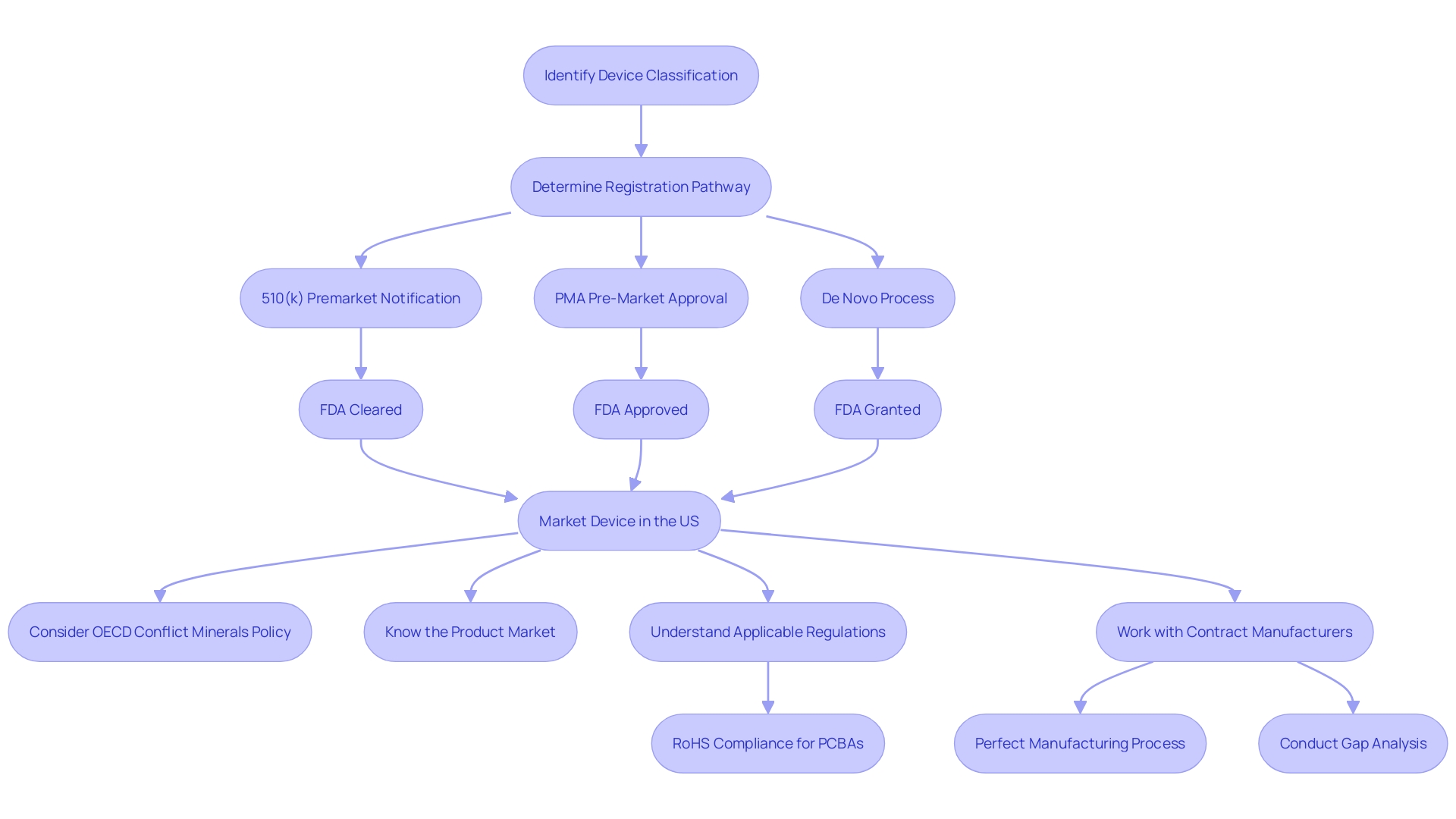
Adherence to the Organization for Economic Cooperation and Development’s (OECD) Conflict Minerals policy underlines the need for comprehensive due diligence in material sourcing, especially for vital minerals like tin, tantalum, and tungsten. These practices are not only ethically necessary but also have a crucial role in upholding compliance and ensuring the safety of healthcare equipment.
The recent case study involving Cardinal Health illustrates the complexities of regulatory submissions, emphasizing the importance of a well-devised . Likewise, manufacturers must maintain visibility into their product’s Bill of Materials (BOM) and ensure their with current regulations.
‘UL Solutions’ new laboratory in Rochester Hills, Michigan, now meets the requirements of the healthcare device industry’s need for comprehensive examination methods. This facility is designed to accommodate different specifications and address risks related to quality, safety, and cybersecurity, while also fostering innovation.
Despite the dependence on animal experimentation in preclinical trials, with an astonishing 90% of drugs failing in clinical trials after animal experimentation, the healthcare community is encouraged to reassess the effectiveness and ethics of current models and investigate more precise and economically feasible alternatives.
Risk management expert Bijan Elahi’s teachings, encapsulated in his book ‘Safety Risk Management for Medical Devices – Second Edition,’ offer valuable insights into the principles of . His experience and practical advice can empower manufacturers to enhance their safety risk management strategies.
Ultimately, overcoming the challenges of biocompatibility testing requires a multifaceted approach, involving up-to-date knowledge of regulations, strategic material sourcing, thorough , and robust risk management practices.
Conclusion
In conclusion, biocompatibility testing is crucial for ensuring the safety and efficacy of medical devices. Adhering to FDA and ISO standards is essential for manufacturers to protect patient health and bring forward innovative technologies. Understanding the regulatory landscape and navigating it effectively allows manufacturers to ensure compliance and foster innovation.
ISO 10993 standards provide a comprehensive framework for evaluating biocompatibility and safety. Material selection plays a critical role, with silicone being widely used due to its versatility and biocompatibility. Sample preparation and conformity assessment methods are key for robust testing.
Key concepts in biocompatibility testing, such as cytotoxicity, irritation, and sensitization, are essential for evaluating the impact of devices on biological systems. Accreditation and assessment ensure the quality and reliability of tests, adhering to international standards.
Best practices include considering materials, manufacturing techniques, intended use, and exposure duration. Analytical chemistry testing and staying informed are vital. Overcoming challenges involves tailoring testing to device composition, due diligence in material sourcing, maintaining visibility into the Bill of Materials, and exploring alternatives to animal testing.
In conclusion, by understanding and navigating the complex environment of biocompatibility testing, manufacturers can protect patient health and bring forward innovative technologies. Adhering to regulatory standards, selecting appropriate materials, following best practices, and leveraging accredited laboratories are key steps in ensuring the safety and efficacy of medical devices.
Frequently Asked Questions
Why is evaluating the compatibility of healthcare instruments important?
Evaluating compatibility is vital to ensure patient safety and the effectiveness of medical products. This process is governed by standards and regulations from entities like the FDA and ISO, which help maintain the integrity of healthcare equipment throughout its lifecycle.
What role do the FDA and ISO play in healthcare instrument compatibility?
The FDA provides regulatory guidelines that, while not legally enforceable, guide manufacturers in aligning their protocols with scientific standards. ISO establishes comprehensive principles for assessing the biological responses of medical instruments, ensuring their safety and effectiveness.
What is a Bill of Materials (BOM), and why is it important?
A Bill of Materials (BOM) details all components of a healthcare instrument. Access to the BOM is essential for compliance with regulations, as it helps manufacturers understand the materials used and their potential impact on safety.
How do manufacturers navigate varying regulations across markets?
Manufacturers often adhere to the highest regulatory standards applicable globally to ensure compliance across different markets. This requires a comprehensive understanding of the specific regulations in each region or country.
What are voluntary consensus guidelines, and why are they significant?
Voluntary consensus guidelines, established by Standards Development Organizations (SDOs), promote transparency and stakeholder involvement in creating standards. They not only ensure compliance but also foster innovation and enhance the availability of safe, effective technologies.
How are recent regulatory policy changes affecting healthcare instruments?
Regulatory bodies like the MHRA are increasingly acknowledging approvals from other regions, simplifying the market access for manufacturers. This change aims to ensure that patients have access to innovative and safe health technologies.
What is biocompatibility evaluation, and why is it critical?
Biocompatibility evaluation assesses how medical devices interact with the human body to identify any potential adverse effects. It is crucial for ensuring the safety and effectiveness of medical instruments.
What key tests are involved in biocompatibility evaluation?
Key tests include cytotoxicity, irritation, and sensitization evaluations, which collectively help determine whether a medical device is safe for its intended use without causing harm.
How do materials used in healthcare instruments affect biocompatibility?
Different materials (metals, polymers, ceramics, and biological materials) have unique characteristics that influence their interaction with the body. Each type requires tailored evaluation protocols to ensure compatibility and safety.
Why is documentation of biocompatibility testing processes essential?
Thorough documentation is necessary for regulatory submissions and helps demonstrate compliance with guidelines. It reflects a manufacturer’s commitment to safety and transparency.
How do laboratories ensure the reliability of biocompatibility tests?
Accredited laboratories undergo rigorous audits to confirm their impartiality and technical competence, ensuring adherence to international standards like ISO 10993.
What advancements are being made in biocompatibility evaluation?
Innovative facilities, like those established by UL Solutions, are equipped to perform comprehensive testing, addressing risks related to quality, safety, and cybersecurity while fostering innovation in healthcare technology.
What is the ultimate goal of evaluating healthcare instruments?
The objective is to ensure that healthcare equipment meets rigorous safety standards, safeguarding patient well-being and supporting the advancement of innovative, effective medical technologies.
List of Sources
- Regulatory Framework and Standards
- gov.uk (https://gov.uk/government/news/mhra-announces-a-proposed-framework-for-international-recognition-of-medical-devices)
- news-medical.net (https://news-medical.net/news/20240113/MHRA-unveils-roadmap-for-new-medical-device-regulations-in-the-UK.aspx)
- starfishmedical.com (https://starfishmedical.com/blog/esg-medical-device-impact)
- fda.gov (https://fda.gov/medical-devices/premarket-submissions-selecting-and-preparing-correct-submission/division-standards-and-conformity-assessment)
- ecfr.gov (https://ecfr.gov/current/title-21/chapter-I/subchapter-F)
- medtechintelligence.com (https://medtechintelligence.com/feature_article/fda-cleared-samd-by-the-numbers)
- gao.gov (https://gao.gov/products/gao-24-106699?utm_medium=social&utm_source=twitter&utm_campaign=usgao)
- federalregister.gov (https://federalregister.gov/documents/2024/09/20/2024-21575/chemical-analysis-for-biocompatibility-assessment-of-medical-devices-draft-guidance-for-industry-and)
- chai.org (https://chai.org/assurance-standards-guide)
- fda.gov (https://fda.gov/medical-devices/premarket-submissions-selecting-and-preparing-correct-submission/division-standards-and-conformity-assessment)
- fda.gov (https://fda.gov/science-research/science-and-research-special-topics/artificial-intelligence-and-medical-products)
- octopart.com (https://octopart.com/pulse/p/ensuring-reliable-sourcing-medical-device-supply-chains)
- Overview of FDA Guidance on Biocompatibility Testing
- fda.gov (https://fda.gov/news-events/press-announcements/fda-issues-final-guidance-clarify-remanufacturing-devices-need-maintenance-or-repair)
- federalregister.gov (https://federalregister.gov/documents/2024/06/25/2024-13872/laboratory-developed-tests-small-entity-compliance-guide-guidance-for-laboratory-manufacturers-and)
- federalregister.gov (https://federalregister.gov/documents/2024/03/15/2024-05584/evaluation-of-thermal-effects-of-medical-devices-that-produce-tissue-heating-andor-cooling-draft)
- fda.gov (https://fda.gov/regulatory-information/search-fda-guidance-documents/guidance-industry-recommendations-early-food-safety-evaluation-new-non-pesticidal-proteins-produced)
- fda.gov (https://fda.gov/medical-devices/premarket-submissions-selecting-and-preparing-correct-submission/division-standards-and-conformity-assessment)
- medtechintelligence.com (https://medtechintelligence.com/feature_article/fda-cleared-samd-by-the-numbers)
- gao.gov (https://gao.gov/products/gao-24-106699?utm_medium=social&utm_source=twitter&utm_campaign=usgao)
- fda.gov (https://fda.gov/news-events/press-announcements/fda-roundup-october-20-2023)
- fda.gov (https://fda.gov/news-events/press-announcements/fda-roundup-november-21-2023)
- fda.gov (https://fda.gov/news-events/press-announcements/fda-roundup-february-16-2024)
- Understanding ISO 10993 and Its Application
- medicaldevice-network.com (https://medicaldevice-network.com/news/ul-medical-testing-us)
- starfishmedical.com (https://starfishmedical.com/blog/esg-medical-device-impact)
- fda.gov (https://fda.gov/medical-devices/premarket-submissions-selecting-and-preparing-correct-submission/division-standards-and-conformity-assessment)
- medicaldevice-network.com (https://medicaldevice-network.com/sponsored/wearables-to-woundcare-medical-grade-silicone-versatile)
- medtechsafety.com (https://medtechsafety.com)
- Material Selection and Sample Preparation for Biocompatibility Testing
- medicaldevice-network.com (https://medicaldevice-network.com/sponsored/wearables-to-woundcare-medical-grade-silicone-versatile)
- fda.gov (https://fda.gov/medical-devices/premarket-submissions-selecting-and-preparing-correct-submission/division-standards-and-conformity-assessment)
- starfishmedical.com (https://starfishmedical.com/blog/esg-medical-device-impact)
- medicaldevice-network.com (https://medicaldevice-network.com/news/fda-clears-establishment-labs-magnetic-free-breast-tissue-expander)
- medicaldevice-network.com (https://medicaldevice-network.com/news/alucent-ide-approval-fda-alucentnvs-study)
- federalregister.gov (https://federalregister.gov/documents/2024/09/20/2024-21575/chemical-analysis-for-biocompatibility-assessment-of-medical-devices-draft-guidance-for-industry-and)
- Key Concepts in Biocompatibility Testing: Cytotoxicity, Irritation, and Sensitization
- starfishmedical.com (https://starfishmedical.com/blog/esg-medical-device-impact)
- federalregister.gov (https://federalregister.gov/documents/2024/09/20/2024-21575/chemical-analysis-for-biocompatibility-assessment-of-medical-devices-draft-guidance-for-industry-and)
- medicaldevice-network.com (https://medicaldevice-network.com/news/ul-medical-testing-us)
- medicaldevice-network.com (https://medicaldevice-network.com/data-insights/medical-devices-synchron-lx-micro-pricing)
- medtechsafety.com (https://medtechsafety.com)
- fda.gov (https://fda.gov/medical-devices/premarket-submissions-selecting-and-preparing-correct-submission/division-standards-and-conformity-assessment)
- Biocompatibility Testing for Specific Medical Device Materials
- beta.qima.com (https://beta.qima.com/services/lab-testing/chemical-testing)
- medtechsafety.com (https://medtechsafety.com)
- fda.gov (https://fda.gov/medical-devices/premarket-submissions-selecting-and-preparing-correct-submission/division-standards-and-conformity-assessment)
- federalregister.gov (https://federalregister.gov/documents/2024/09/20/2024-21575/chemical-analysis-for-biocompatibility-assessment-of-medical-devices-draft-guidance-for-industry-and)
- medicaldevice-network.com (https://medicaldevice-network.com/news/fda-clears-establishment-labs-magnetic-free-breast-tissue-expander)
- medicaldevice-network.com (https://medicaldevice-network.com/news/alucent-ide-approval-fda-alucentnvs-study)
- medicaldevice-network.com (https://medicaldevice-network.com/sponsored/wearables-to-woundcare-medical-grade-silicone-versatile)
- starfishmedical.com (https://starfishmedical.com/blog/esg-medical-device-impact)
- rimsys.io (https://rimsys.io/blog/fda-listed-cleared-approved-granted)
- starfishmedical.com (https://starfishmedical.com/blog/esg-medical-device-impact)
- The Role of Accreditation and Assessment in Biocompatibility Testing
- fda.gov (https://fda.gov/regulatory-information/search-fda-guidance-documents/guidance-industry-recommendations-early-food-safety-evaluation-new-non-pesticidal-proteins-produced)
- fda.gov (https://fda.gov/medical-devices/medical-devices-news-and-events/fda-and-cms-americans-deserve-accurate-and-reliable-diagnostic-tests-wherever-they-are-made)
- adalovelaceinstitute.org (https://adalovelaceinstitute.org/blog/an-infrastructure-for-safety-and-trust-in-european-ai)
- medicaldevice-network.com (https://medicaldevice-network.com/news/ul-medical-testing-us)
- raps.org (https://raps.org/products/medical-device-standards-specifications-and-testing?utm_campaign=online_u_device_standards&utm_source=twitter&utm_medium=social)
- fda.gov (https://fda.gov/regulatory-information/search-fda-guidance-documents/chemical-analysis-biocompatibility-assessment-medical-devices)
- fda.gov (https://fda.gov/medical-devices/industry-medical-devices/fraudulent-and-unreliable-laboratory-testing-data-premarket-submissions-fda-reminds-medical-device)
- Best Practices for Conducting Biocompatibility Tests
- onlinelibrary.wiley.com (https://onlinelibrary.wiley.com/doi/10.1002/cyto.a.24807)
- aibiodesign.com (https://aibiodesign.com/p/how-ai-will-replace-animal-testing)
- the-scientist.com (https://the-scientist.com/the-marketplace/mastering-cell-culture-liquid-handling-71455)
- medicaldevice-network.com (https://medicaldevice-network.com/buyers-guide/medical-device-testing)
- medicaldevice-network.com (https://medicaldevice-network.com/news/ul-medical-testing-us)
- wandb.ai (https://wandb.ai/stacey/saferlife/reports/Progress-so-far–VmlldzoxMDk3ODkx)
- fda.gov (https://fda.gov/regulatory-information/search-fda-guidance-documents/chemical-analysis-biocompatibility-assessment-medical-devices)
- starfishmedical.com (https://starfishmedical.com/blog/risk-management-fda-guidance-iso-10993-1)
- medtechsafety.com (https://medtechsafety.com)
- starfishmedical.com (https://starfishmedical.com/blog/esg-medical-device-impact)
- rimsys.io (https://rimsys.io/blog/fda-listed-cleared-approved-granted)
- starfishmedical.com (https://starfishmedical.com/blog/esg-medical-device-impact)
- starfishmedical.com (https://starfishmedical.com/blog/medical-device-manufacturing-tips)
- Common Challenges and Solutions in Biocompatibility Testing
- aibiodesign.com (https://aibiodesign.com/p/how-ai-will-replace-animal-testing)
- fda.gov (https://fda.gov/regulatory-information/search-fda-guidance-documents/chemical-analysis-biocompatibility-assessment-medical-devices)
- starfishmedical.com (https://starfishmedical.com/blog/esg-medical-device-impact)
- info.cardinalhealth.com (https://info.cardinalhealth.com/l/34802/2024-01-03/3t7846w?cid=EML-TRD_OTR-PHR-SS-BP_RGS-Big4Bio-Successful_IND_submission_case_study-Download-Feb_24&CID_Campaign=EML-TRD_Fahlgren-Big4Bio)
- medicaldevice-network.com (https://medicaldevice-network.com/news/ul-medical-testing-us)
- medtechsafety.com (https://medtechsafety.com)